
Indiana Fugitive Lists
Indiana has no single page mixing fugitive notices with county arrests, custody data, and court files. The material splits by agency role. IDOC posts a state fugitives flyer. The U.S. Marshals Service shares federal fugitive details by district and through national lists. County agencies run their own pages and tip lines. These records answer different questions. A wanted poster asks the public for information. SAVIN and VINELink show custody status and send notifications. A court docket tracks filings and outcomes. Each tool belongs to an agency with authority over the person or case. A fugitive photo is not a county booking photo.
Indiana Busted Fugitive Sources
Begin with whichever agency issued the notice. The listings below separate wanted material from status and notification tools. Neither works as a mugshot feed or a warrant-clearance service.
| Official source | Purpose | Photo or status role |
|---|---|---|
| IDOC Fugitives: Most Wanted flyer | State corrections fugitive notices | The flyer has identifying information and photos. IDOC warns that listed fugitives should be considered dangerous. |
| IDOC warrant procedure | Administrative warrants and apprehension steps for supervision absconders | A procedure document, not the public flyer or proof that a name appears there. |
| Indiana SAVIN and VINELink Indiana | Custody status and notification | Tracks status and alerts; it is not a statewide booking-photo archive. |
| IDOC alert notification | Prison escapes and public-safety emergencies | Emergency alerts are distinct from fugitive-list and case-disposition records. |
| USMS Northern District of Indiana and USMS Southern District of Indiana | Federal district information and profiled-fugitive material | Profiles may carry a photo and identity details. The Southern page may have no profile at a given time. |
| National USMS Most Wanted and Profiled Fugitives | Federal fugitive investigation lists | Authoritative federal list paths, not Indiana court-disposition records. |
A person missing from one list may still appear elsewhere. Another agency's files can hold the same name. Each office decides what it publishes. County notices live on county pages. Indiana offers no single statewide index of county wanted notices. The Indiana County Directory links to local coverage so you can check each jurisdiction yourself.
County Notice Coverage
Each county or city agency posts its own notices, and no state or federal page can replace those local sources. There is no statewide index of county wanted pages. No common posting schedule exists either. A county's law-enforcement site is the place to look for current notices and tip instructions, and any court question should go to the county where the case was filed.
Some county apps do offer contact and tip functions. Still, an app listing is not a wanted roster. A jail page tells you who is in custody. A fugitive notice, by contrast, asks for tips about someone an agency is still seeking.
Send a Tip Safely
Send tips only through channels the agency itself publishes. IDOC's flyer lists investigator contacts. The Northern District of Indiana USMS page runs a 24-hour tip line. Not every route promises anonymity or a reward, so read that agency's own instructions first.
Published Indiana tip contacts
IDOC investigator numbers printed on its flyer: 317-234-9752 and 317-234-4948.
USMS Northern District of Indiana: 1-888-869-4589, 24 hours.
Immediate danger: call 911.
The App Store listing for the Blackford County Sheriff app shows county contact and tip features. It is a local agency app, not a statewide wanted list.
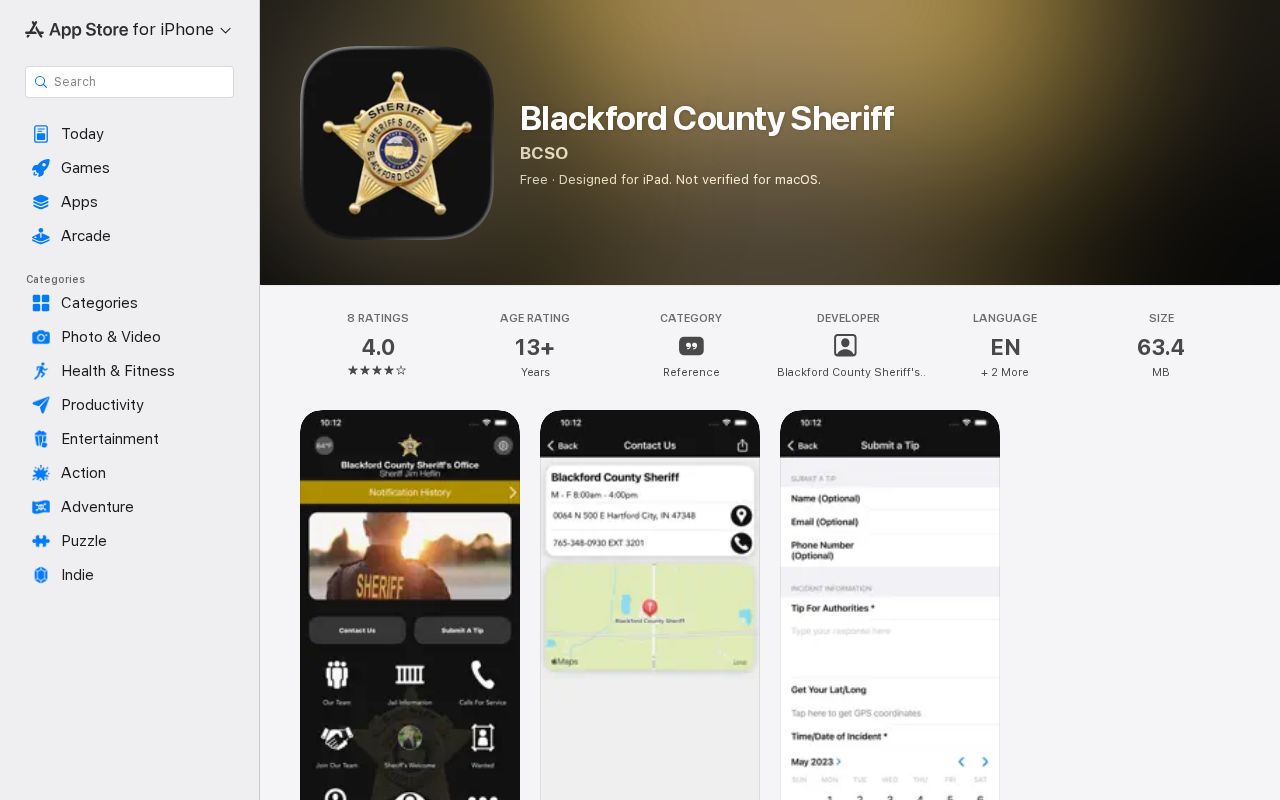
That listing is a local contact and tip route. It does not prove an active fugitive notice. The official Pike County Sheriff app listing also displays contact and tip options. County tools add a local route, but the issuing state or federal list still governs a notice.
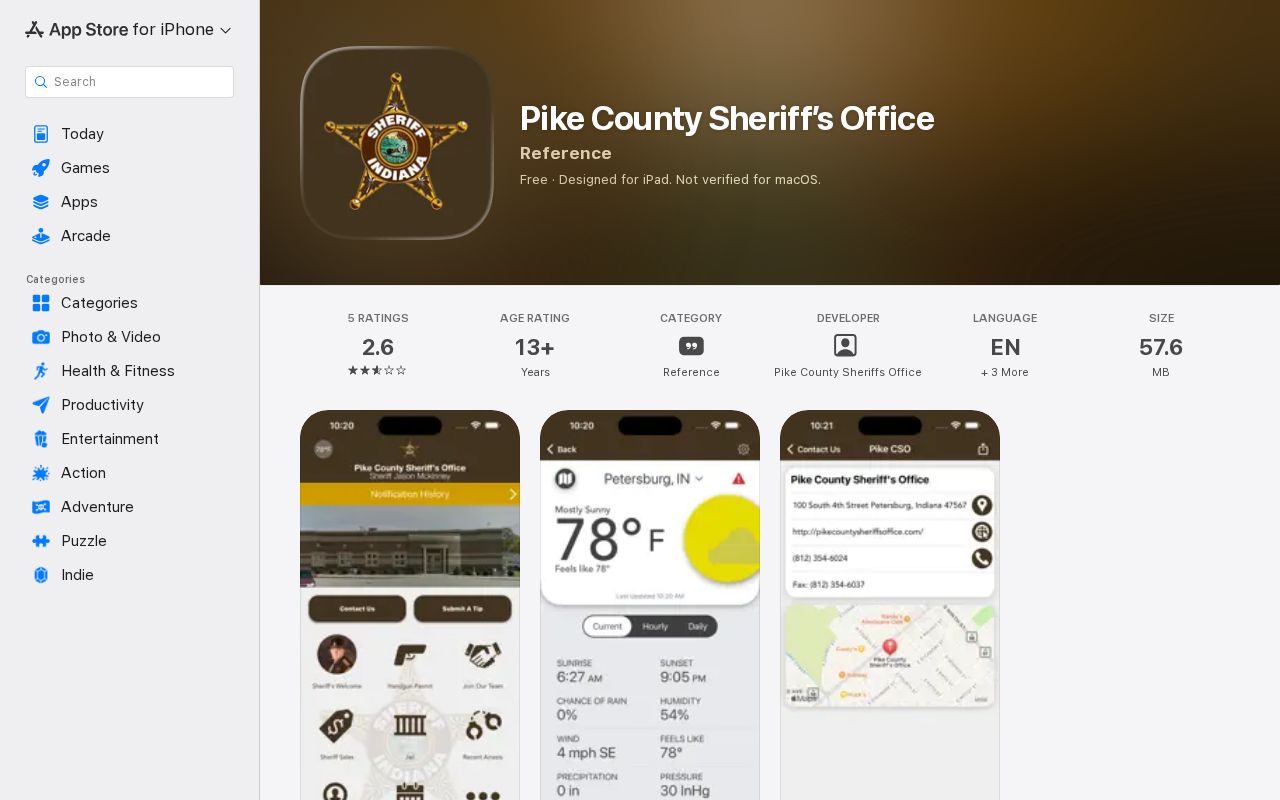
This is another county interface example, not a statewide wanted-list result. If you submit information, give only what you know and follow the agency's instructions. Do not post a possible location online. Do not send anyone to confront the subject. Do not call an app developer or an unrelated county about a federal profile.
Indiana Busted Warrant Checks
A wanted flyer is not a warrant registry. MyCase searches public, non-confidential court cases. It is not a live statewide active-warrant list. Indiana's official sources include no such statewide warrant search. So a missing MyCase result clears nothing, and a flyer says nothing final about a case. For current status, ask the county court or the responsible law-enforcement office. Warrants change. People share names. A judge may keep an unserved warrant confidential under Indiana Administrative Rule 9(G)(1)(b)(x). The official Indiana MyCase search helps locate a public case and docket, but its form shows no live warrant status.
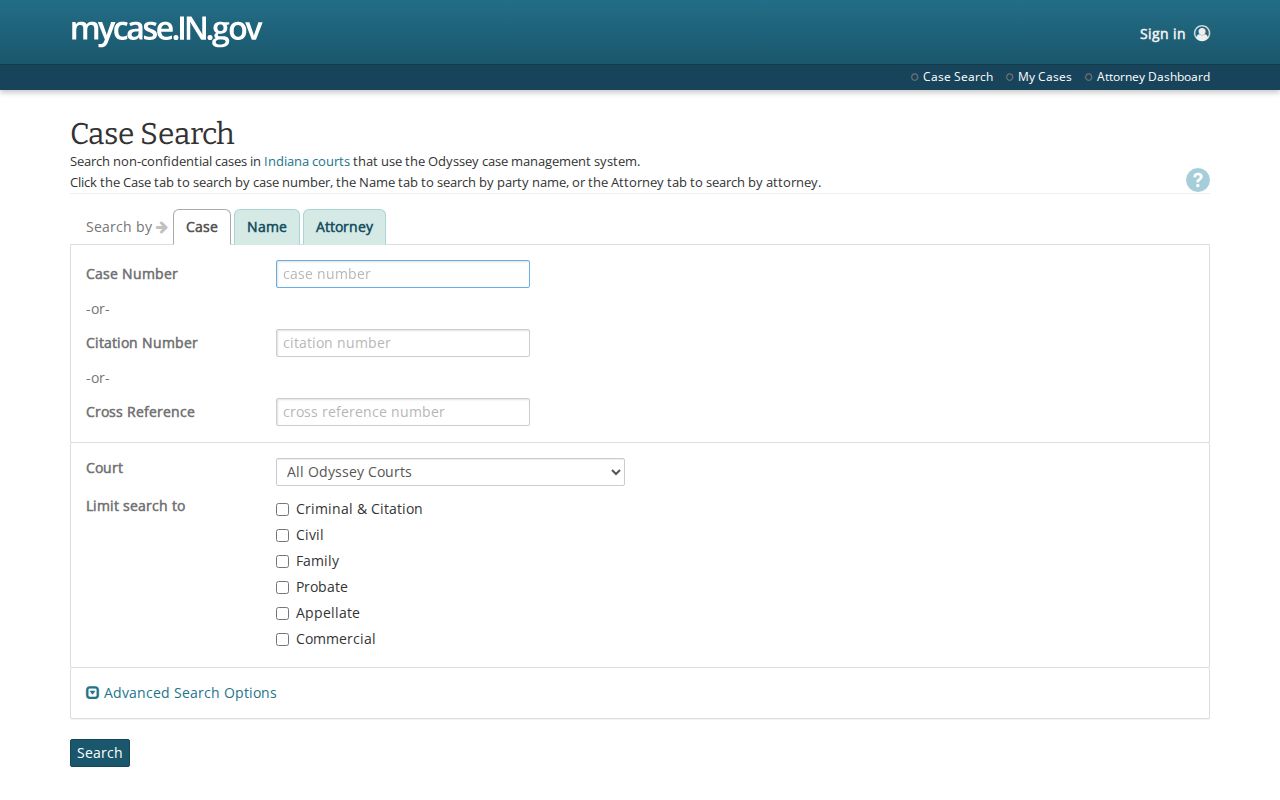
This blank form marks the start of Indiana's public case search. It holds no roster of people with active warrants. To check the right record:
- Identify the county and court tied to the case. Gather a case, citation, or cross-reference number if you have one.
- Search MyCase by number first. For a name search, enter the last name and use a first or middle name only to narrow it.
- Use a date of birth only when certain. The portal may return up to 1,000 results and uses a captcha with anti-data-mining controls.
- Read the docket disposition, then contact the court or responsible agency to verify current warrant status. Ask for the legal basis if the record is withheld.
For county arrest feeds, booking photos, and official record paths, continue with the Indiana busted mugshots statewide guide. Booking, custody, and court records are separate systems. Match your question to the right county or court source.
How Indiana IDOC Handles Absconders
Fugitive apprehension sits inside the workload of the IDOC Operations Division. The division houses its Investigations and Intelligence teams. The department also keeps a public fugitives flyer. That flyer stands apart from its supervision warrant procedure. Under the procedure, an absconder is a parolee or community-supervised person. That person stops reporting or leaves without notice. The paperwork then covers administrative warrants and the steps for apprehension. Nothing in it promises that every administrative warrant lands on the public flyer. The flyer itself works as the state's direct wanted list for the public. It carries photos, identifying details, a safety warning, and investigator tip numbers. Treat the live agency document as the place for current notices.
| Field or notice | What the source supports | How to read it |
|---|---|---|
| Identity details | The flyer provides identifying information for listed fugitives. | Compare details carefully; a similar name alone does not confirm identity. |
| Photograph | The flyer contains photographs. | A photo is an investigative aid, not proof of a charge or conviction. |
| Safety warning | IDOC says listed fugitives should be considered dangerous. | Do not approach, follow, confront, or try to detain anyone shown. |
| Tip contacts | The flyer prints IDOC investigator numbers 317-234-9752 and 317-234-4948. | Use the published agency route for non-emergency information. |
Note: The flyer is a current agency notice only when the live IDOC source still lists the person and contact instructions.
A photograph alone settles nothing. A missing name does not either. One flyer is only a slice of an agency's work, and a profile can shift as an investigation or court matter moves forward. Trust the source page itself, not a copied screenshot or a search snippet, for what the agency currently asks the public to do.
Read a Busted Fugitive Notice
A wanted list can point you to the agency's tip route. It cannot verify every part of a person's identity or case history. Read it as a public-safety notice, then follow the issuing agency's directions rather than acting on your own.
- Open the official IDOC or USMS source that issued the notice. Confirm the agency name and that the page is an active official source.
- Compare all identifying details shown. Do not rely on a name alone, a cropped image, or a third-party copy of a flyer.
- Read any danger warning and the published contact instructions. Keep the person’s location private from public comments.
- Send non-emergency information to the agency’s listed tip route. If an immediate threat is taking place, call 911.
A listing can go stale. It can be mistaken, or changed by later court action. Agencies seek public help with tips, not fieldwork. So do not investigate, track, or test a notice yourself.
Warrant Types and Limits
Indiana's published material supports a few clear distinctions, though it sets out no bench-warrant rules. The table sticks to categories documented by the Public Access Counselor and the IDOC procedure.
| Documented category | What the research says | What to verify |
|---|---|---|
| Unserved arrest warrant | It is not automatically confidential just because it has not been served. | Ask the court or responsible agency whether the record is public and current. |
| Judge-ordered confidential warrant | Administrative Rule 9(G)(1)(b)(x) permits confidentiality when a judge orders it. | Ask for the legal basis if access is denied; do not assume every warrant is secret. |
| IDOC administrative warrant | IDOC procedure addresses warrants and apprehension for a person on parole or community supervision who fails to report or leaves without notice. | Do not treat the procedure as proof that the person appears on the public flyer or as a court disposition. |
Note: A third-party “warrant search” label is not evidence that an active warrant exists for a particular person.
When an office withholds a record, ask why. The reason matters. A court order, an investigatory-record rule, juvenile confidentiality, or a sealed or expunged file can each block access, and every denial rests on its own legal authority. A blank roster or a missing wanted notice tells you nothing about whether a court issued, recalled, or limited a warrant.
Custody Alerts and Busted Photos
Indiana SAVIN and VINELink handle custody-status checks and notifications. They can tell you when custody changes. They are not booking-photo feeds. They do not clear warrants either. An IDOC alert is narrower still, since the department's page covers prison escapes and emergency information only. None of these services replaces a fugitive flyer or a court file. The SAVIN site itself shows a custody and notification interface built for status information and alerts, not a full arrest history.
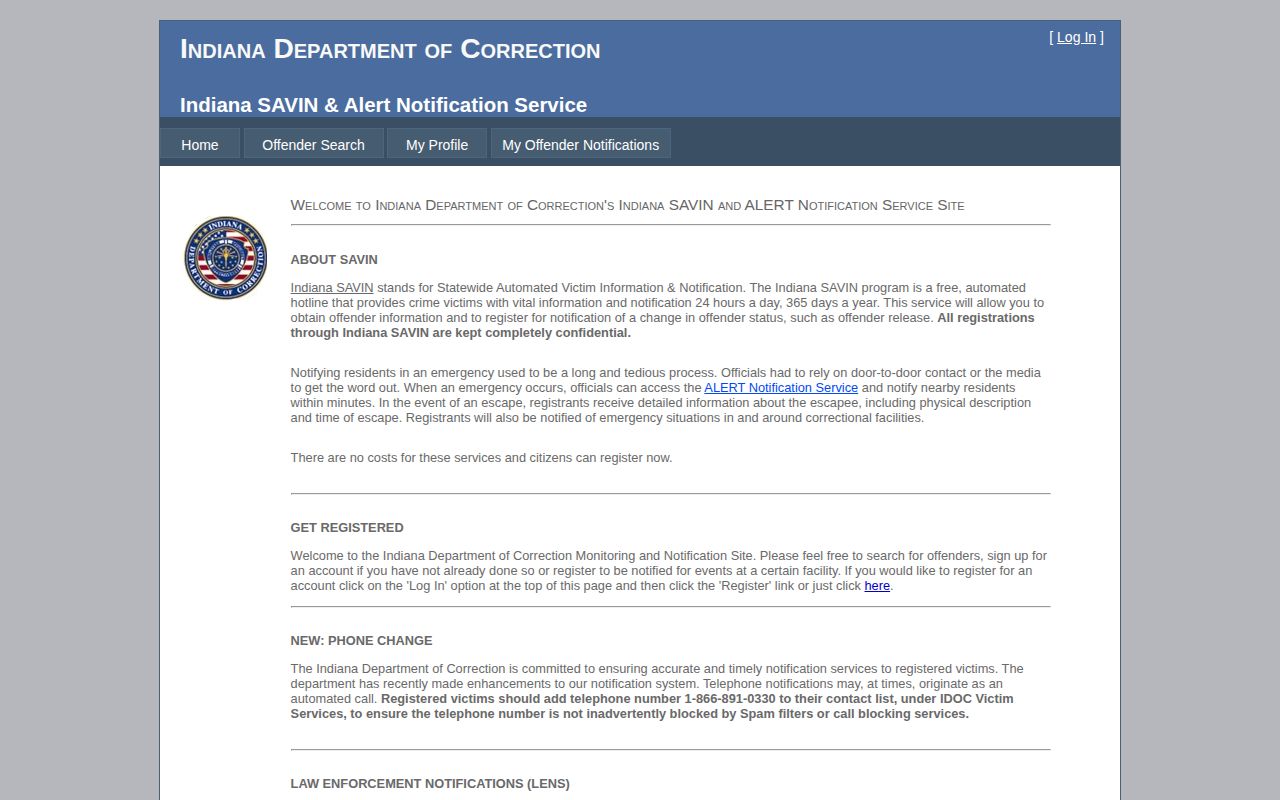
That screen tracks custody status and alerts. It stands apart from fugitive notices and court outcomes. The IDOC alert notification page covers emergency notices, including prison escapes, and is separate from both the Department's fugitive flyer and the corrections absconder procedure.
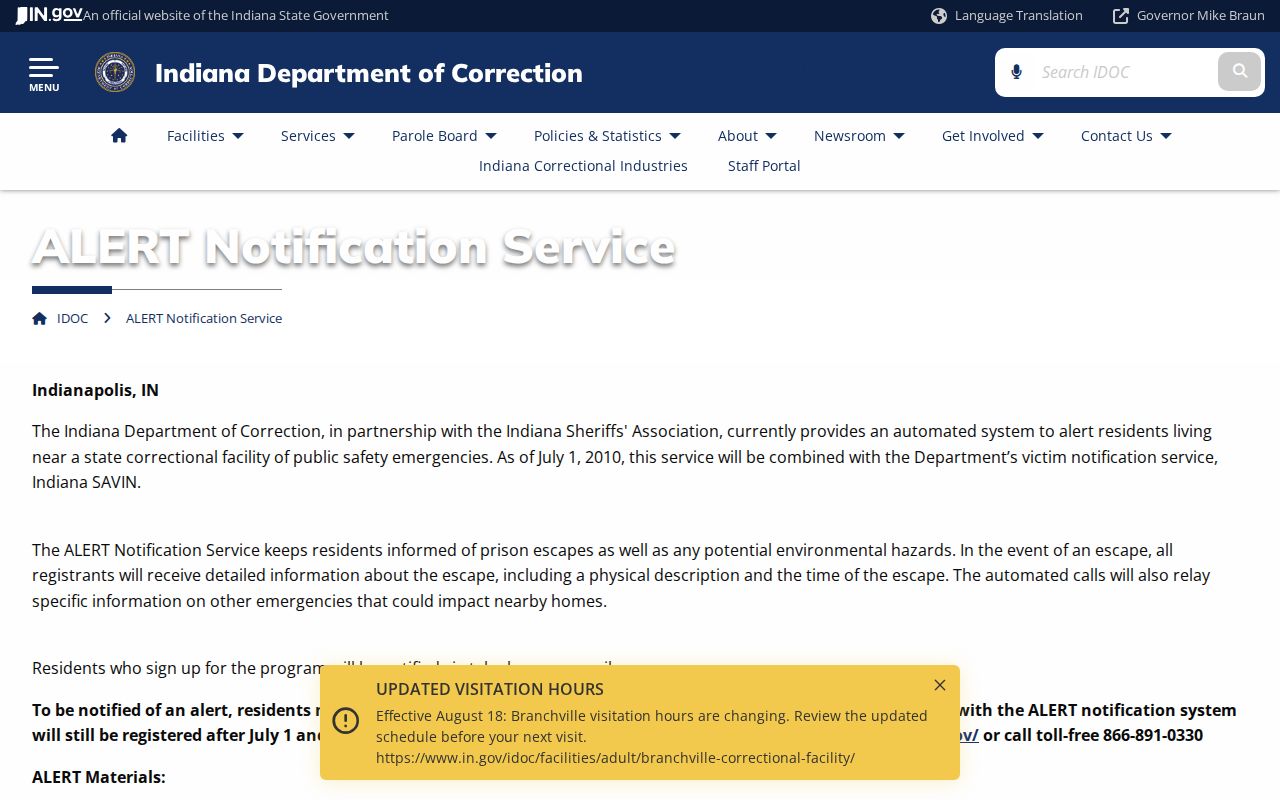
That page serves emergency alerts. It is not a booking-photo or court-disposition search. Keep custody and case status separate. A person can leave custody while a case stays open, and someone an agency seeks may not show up on a county's current roster. For court status, use the docket; for custody notices, use the alert service; for a fugitive tip, use the agency's published contact.
Why Busted Photos Need Context
A fugitive image is easy to misread. It can look like proof of a fresh Indiana arrest when it is really an older agency photograph tied to supervision or a federal investigation. A booking image is different. It records an intake event and nothing more. Names can be wrong. Photos can be stale. Status can shift with court action. Check the source's current notice, then pull the court docket or ask the responsible agency about the record. A USMS profile works as an investigative notice, not a state filing. And an IDOC flyer is never a complete list of local arrests.
Note: If identity or status is unclear, do not share the image as a confirmed match; ask the agency through its published route.
Safety: Never approach, confront, follow, or try to detain anyone on a wanted list. Call 911 for immediate danger, and send non-emergency information only to the agency's published tip line.
Official notices exist to route information to agency staff. They do not invite public investigation, so let the court record supply the outcome.